
Latest posts
Stay updated with fresh insights, trends, and stories.

Liquidation Value vs Going Concern Value: Key Differences
Liquidation value estimates what a company's assets are worth if sold off during a shutdown, while going concern value reflects a business's worth as an ongoing operation generating future cash flow and goodwill.

Replacement Cost Method of Valuation Explained
The replacement cost method of valuation values an asset at today's cost to replace it with an equivalent, minus physical, functional and economic depreciation. It is used for machinery, property, insurance and financial reporting.

Monte Carlo Simulation in Valuation: How It Works
Monte Carlo simulation valuation runs a model thousands of times with sampled inputs to produce a value range with probabilities. Learn the six-step process, uses in DCF, 409A and ASC 820, a worked example and limits.

Real Options Valuation Explained: Formula, Types and Use Cases 2026
Real options valuation is a method that prices management's flexibility to expand, defer, abandon or switch an investment. It uses option pricing models to value choices that traditional DCF analysis ignores.

Sum-of-the-Parts Valuation: When and How to Use It
Sum of the parts valuation values each business segment separately, then adds them up. This guide covers the SOTP formula, when to use it, a worked three-segment example, the conglomerate discount, and the errors that distort results.
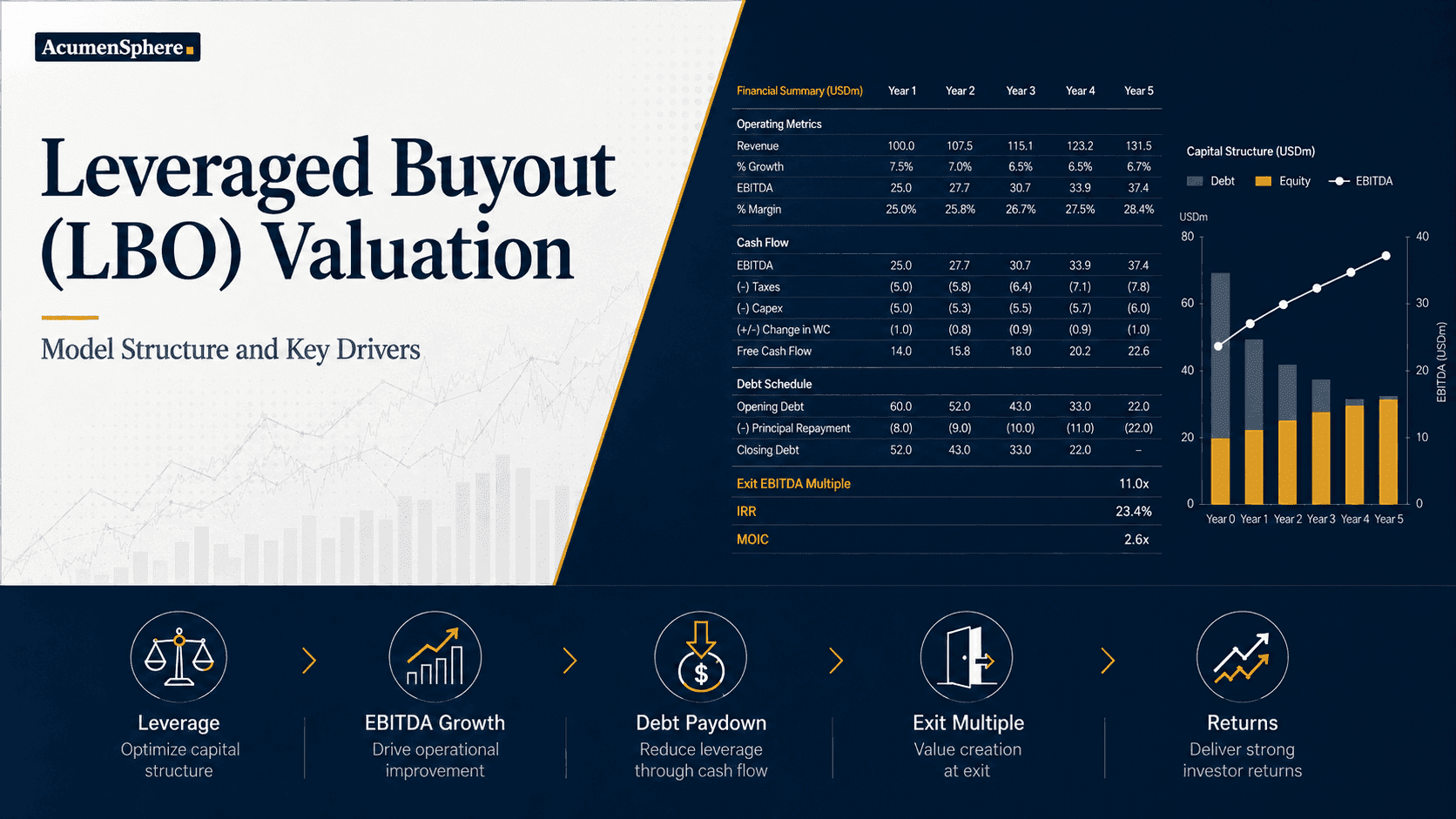
Leveraged Buyout (LBO) Valuation: Model Structure and Key Drivers
LBO valuation is the method used to price a company by working backward from a private equity sponsor's target return, based on the debt used to fund the deal and the cash flow available to repay it, rather than the company's standalone value.